Works in Progress

The holidays proved to be quite busy. Jean got a virus that kept her home for about 3 weeks so I attended dinners, open houses, and other holiday events by myself. Thankfully, she’s feeling better in the last few days. After a week of cold and sunshine today it is snowing and still cold. Can we make it through the winter without dashing for sunshine in the southland?

We have begun to plan for our next Travels With Picasso. Picasso will be our home on the Columbia River for a week in May. We love that time of year in the eastern Washington desert. Then we will travel to the Canadian Rockies for a couple of weeks in June-July. I will be attending a Liz Wiltzen studio art workshop for 5 days. Jean will be painting the scenery. We also plan to take Picasso to Mt. Rainier in August for a camping/art trip. Undoubtedly we will be planning other adventures as the year goes along. Yes, we also have begun preliminary discussions about a return to Europe.

In addition to holiday partying I spent a great deal of time in my “new” studio. All three easels were in operation at one time! It has been fun to paint pictures from our travels. A few of the works in progress are below. The block prints are carved in lino blocks, printed on watercolor paper and then colored with watercolor. Etretat France is one of the most painted places. Artists have been traveling there to paint for at least 200 years. I couldn’t resist trying my hand at the arch painted by so many of my artistic idols. The redwing blackbird is taken from a photo I captured on a hike in California. I wasn’t sure how the rear view of a landing would work, but I like it.

Happy New Year.

Paul

This slideshow requires JavaScript.

Posted in Art, Travel | Tagged , , | 1 Comment

Happy Holidays

We want to wish everyone a happy holiday season, regardless of what holiday you celebrate during this dark time of year. One lesson from our year of travels is that although people worship different gods, practice different customs, and cherish their own ways, in the end we all are human beings seeking health and happiness.

We hope this season finds you all healthy and happy.

Paul and Jean

This slideshow requires JavaScript.

Posted in Photography, Retirement, Travel | Tagged , , , , , , , , | 3 Comments

Entered Photo Contest

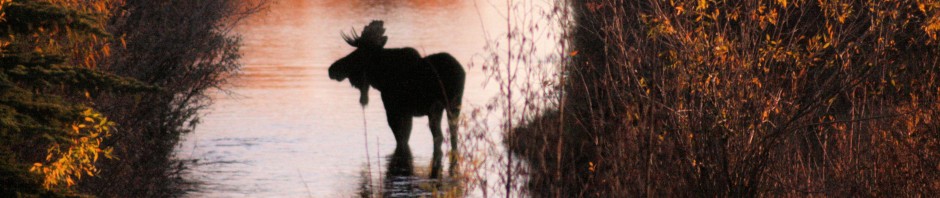
I just entered Share The Experience, the U.S. Federal Recreation Lands annual photo contest. My photos are Los Padres Sunset and Teton Moose. The entries are judged down to the final 100 by January 15. These finalists are posted online for open voting on the best photo. If I make the finals I’ll be asking you to vote for my entry.

Thanks,

Paul

This slideshow requires JavaScript.

Posted in Photography, Travel | Tagged , , , | Leave a comment

Celebrating Jean’s Birthday in Long Beach

Home less than 2 months and we were off again. This time it was a 5 day jaunt to Long Beach to celebrate Jean’s birthday. We love the beach in the winter and have enjoyed several long walks in the crisp air. Here are a few photos.

Happy birthday my love!

This slideshow requires JavaScript.

Posted in Photography, Travel | 1 Comment

Studio Photos

I found my lens with a bit wider angle, so here are some photos of my “new” studio.

Paul

This slideshow requires JavaScript.

Posted in Art | 2 Comments

My Studio Is Finished!

Hooray! Yesterday marked the completion of repairs and remodel to my studio. As I posted previously, we returned from our senior citizen semester abroad to discover that my studio floor was rotted and caving in. I’ve been offline for a few weeks making the repairs. While I had it torn up I decided to upgrade the lighting, add a couple of fixtures, paint the ceiling and walls, and install a laminated faux wood flooring. An artist’s work is never done!

At only 85 square feet I don’t have much to work with, but I’ve made it “cosily workable.” I now have 3 easels set up – one each for oil, watercolor, and acrylic. The work table is for sketching, block printing, monoprinting, or painting very large watercolors. In one corner I have a soft chair in which I can set back and contemplate all three easels to plan my next steps. Storage is on shelves on the walls. One wall (the most accessible to the easels) holds paint, brushes, solvents, and other active painting supplies. The wall behind the door has papers, reference materials, and items to use in still lifes. A closet holds blank paper and canvas as well as finished paintings. No, there isn’t much floor space. However, I can step back about 6 feet from each easel. That’s not as far as I would like to review my painting, but it’s all I can get in such a small space. I would post a picture, but the room is so small I can’t get a decent shot.

Now it’s time to get painting!

Paul

Posted in Art | 2 Comments

Art Lessons From A Senior Citizen Semester Abroad

One major purpose of our extended stay in Europe was to advance our knowledge of and skills in painting. To do so we visited museums, watched many DVD’s about famous artists, toured their studios, walked and sometimes painted in the places they painted, and looked at the scenery with an artist’s eye. I came away with some new perspectives (call them lessons if you will) on the art of capturing an image. Here are some of the lessons I learned along the way and am trying to incorporate into my painting and my photography.

1. Draw lines, but not necessarily sharp edges. This is a paraphrase of Edgar Degas, but similar comments were made by my favorite artists. Line gives form to what we are portraying. Without lines the viewer could not distinguish a circle from a square or a person from a tree. The best artists we saw were superb draftsmen with lines. That was not always obvious because their style of laying down the paint sometimes distracts the casual viewer from seeing the lines. For instance Vincent Van Gogh‘s paintings are sometimes described as chaotic slashes without much planning or purpose, but I see very strong lines in his work. Jack Yeats said, “I believe that the painter always begins by expressing himself with line that is by the most obvious means. Then he becomes aware that line once necessary is in fact hemming him in. And as soon as he feels strong enough, he breaks out of its confines.”

Strong lines do not mean sharp edges. Degas’ images of people have clear lines, but the edges of those lines are key to making the painting come alive. Indistinct or fuzzy lines make our eyes see depth. The painting takes on more life. Sharp edges make objects stand out from the rest of the painting. Use sharp edges where you want to draw the viewer’s eyes first. (In photography this is achieved by controlling the depth of field.) Take a look at Renoir, Monet, Manet, Turner, Van Gogh, Cezanne, and others and you will see distinct lines with mostly indistinct edges. You will see that the edges become sharper at the point the artist wants you to focus first. Here’s a watercolor where I tried to put this into practice. The sharpest edges are in the rocks and fence post and, hopefully, draw your eye there first. The lines of the field, rock fence in the distance, and mountains are less distinct and create a feeling of depth.

Dingle Rock Fences

2. Create large (I could almost say extreme) contrasts between dark and light. This relation of light and dark is referred to as value in the art world. The paintings with the most sizzle that have people in museums and galleries standing in front of them have very dark darks and very bright/light lights. Often these extremes are placed near to each other to increase the contrast. They also often are near the major point of interest in the scene. This point was most brought home to me in our visit to the Musee de Arte Moderne in Ceret, France. This small town sits in the eastern edge of the Pyrenees. It was home to a lively art community in the 20th century. Andre Messon, Jean Marchand, Pierre Brune, Marolo, Arbit Biatas, Maurice Lautreuil, Leopold Sarvage, Chaim Soutine, and Pablo Picasso all lived here for a time and have works in the museum. Cezanne, Monet, and others visited to share with fellow artists. The most striking observation was to see the same scene painted by several different artists and determine what made one more interesting than others. Invariably the more eye-catching paintings had great contrasts in value. Most artists and photographers (myself included) are afraid of getting too dark or too bright. We tend to paint light and medium shades and call that contrast.

I will be trying to put greater value contrast in my future paintings and seeking it in my photography. You can see a bit of this in the previous painting. Here’s a study I did experimenting with value contrast. I painted the rocks nearest the white breakers much darker to create more value contrast in that area. Now I think those rocks could be even darker.
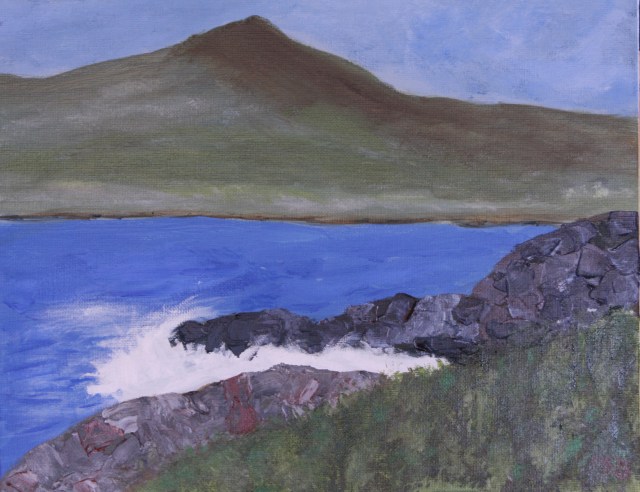
Smerwick Harbor

3. Use colors to heighten interest in your painting. Colors can compliment, contrast, or conflict with each other, create a buzz in the viewer’s eyes, sooth the viewer’s eyes, highlight a feature, or deaden a feature. It is most important to know and recognize the role each color plays that you choose to put on the canvas.

Challenge what your brain tells you about color. Our brain averages the eyes’ input by the use of memory from previous experience. We look at a leaf and think “green.” We don’t really see the leaf, just a remembered image of what we think a leaf should be. I am looking across the room at a philodendron. the leaves appear green on one side and reddish on the reverse. But if I take the time to really see the leaves there are yellow spots, yellow reflections from light across the room, blue tinge from the sky outside the window, and all of these combine to create the color of the leaf. Painting that leaf with shades of green on one side and red on the other would create a flat image that would not generate interest. Adding the colors that are reflected makes the painting come alive.

Challenge your notion of what color things “need” to be. Van Gogh used color to highlight items. If a person’s cheek was shaded he might put a slash of green rather than the usual bluish tint in the skin. The green compliments the rosy hues of the skin and generates a spot of interest in the painting. Perhaps he saw green in the skin tones, but I think he dared to challenge and use color to create a point of interest. Cezanne’s landscapes have spots of surprising colors among the foliage and rocks.

In Smerwick Harbor (above) I used several colors in the near rocks to generate detail and increase the focus on the breakers. In these paintings I highlighted the complimentary colors, red and green in the first and orange and blue in the second. Both of these paintings are from photographs taken at the Jardin du Plantes in Paris.
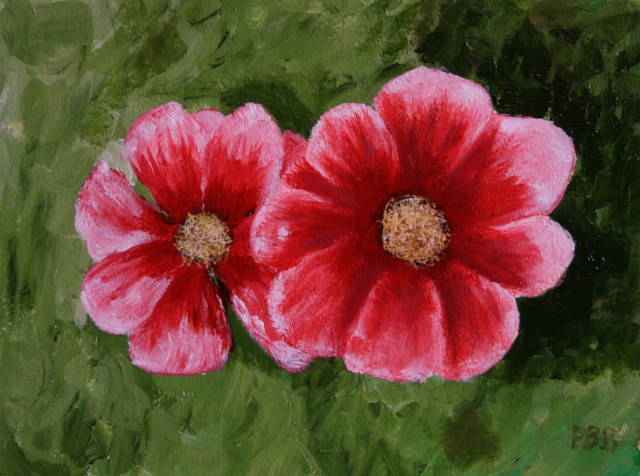
Red Flowers
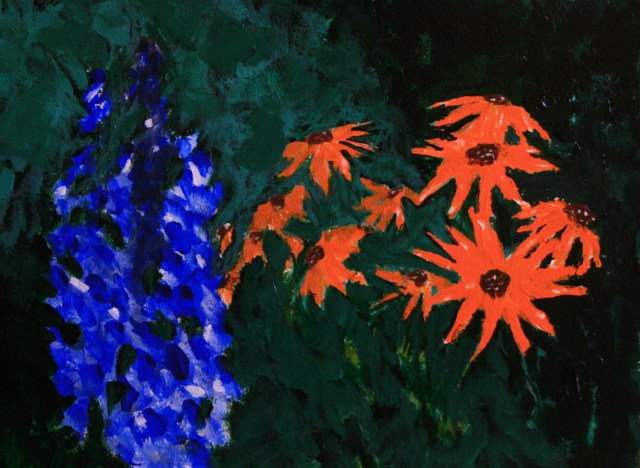
Orange and Blue Flowers

4. Finally, plan your paintings carefully and test your composition, colors, and brushwork on studies. Several museums demonstrated the planning and preparation that went into a masterpiece. Turner painted dozens of studies before completing his famous works. In the Musee Toulouse Lautrec in Albi, France there are two rooms that each have one finished painting and all of the works leading to it. Sketches, studies of certain figures, preliminary paintings in watercolors, a draft in oil, and then the finished work. We saw evidence of this with all the great artists. Sketching a scene dozens of times to get just the right composition is painstaking work, but it clearly pays off in the final product. Using watercolor, charcoal, or other mediums to test color, lines, edges, etc. provides a solid foundation for designing the final painting. I would add multiple photographs to that list. If it had been commonly available I believe all the great artists would have used reference photos. The Renoir exhibit we saw in London at the end of our stay in Europe showed him experimenting with photography to capture human and animal gestures. I can only think that this enhanced his rendering of people that we so adore today.

The next several paintings are my attempts to plan more carefully. I loved the arrays of umbrellas on the beaches and streets. I first captured them with the camera, then painted a watercolor study. When we arrived home I did Mediterranean Beach Forest.
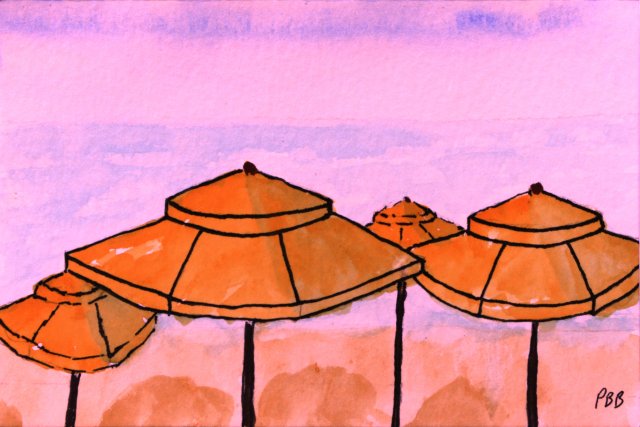
Mediterranean Beach Forest Watercolor Study
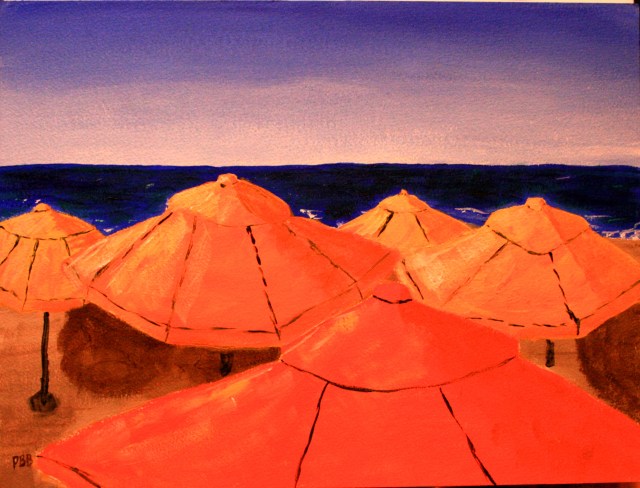
Mediterranean Beach Forest

In this series you see the photograph, a charcoal value study, and a completed watercolor. Perhaps I will now interpret this scene in oil or acrylic. This is the dome on Les Invalides in Paris as seen from an island in the Seine.
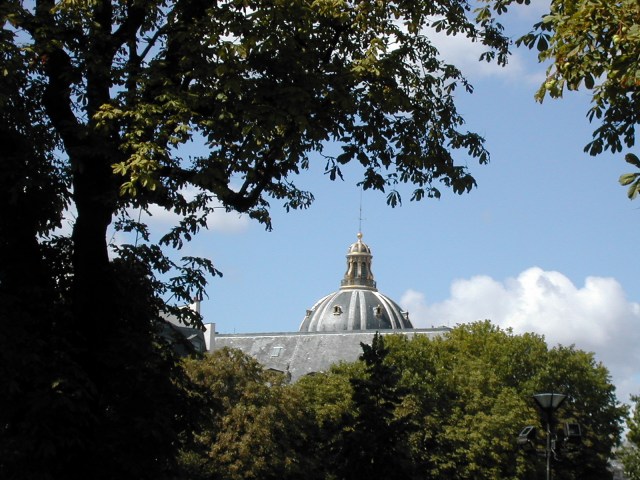
Les Invalides Photo
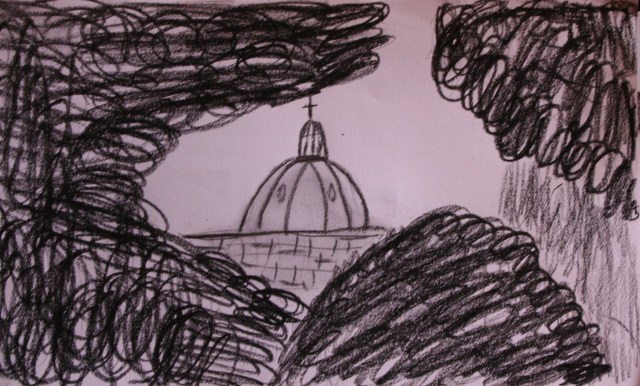
Les Invalides Charcoal Sketch
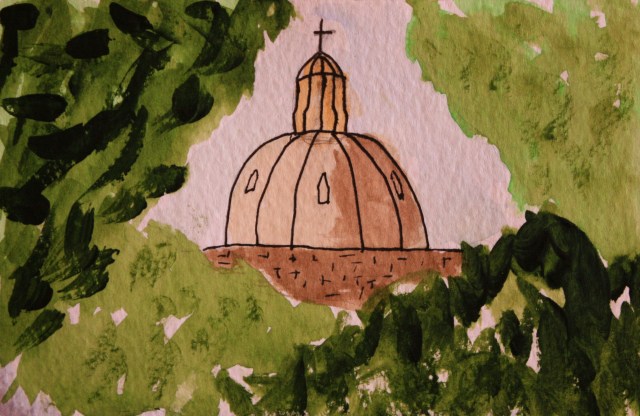
Les Invalides

I am most drawn to paintings created after 1800. This is not a revelation, but we did try to expand our base by looking at older works. The Dutch Masters are wonderful in their command of the medium and tools of their time. They used value contrasts (light and dark) to dramatic effect. Early Italian painters were using bright colors and complimentary colors long before others in Europe. We saw a fine example of this in an exhibit of Fra Angelico panels. Although I learn from their techniques these earlier works do not appeal to my personal tastes. Therefore, generally the earliest painters I am drawn to are J. M. W. Turner, Constable, the Barbizon painters, Delacroix, Corbet, Corot, and others from the early 19th century. These artists were superb draftsmen with strong lines, but also began to understand the importance of edges. They learned that fuzzy edges create depth and interest. The Impressionists, post-Impressionists, Abstract Impressionists, and some early Abstracts grab me most. The Impressionists seem to have combined all these lessons to create their art. Those who followed into the 20th century experimented further with these concepts.

The challenge now is to absorb all that I have seen, heard, and experienced and put it into my own interpretations.

Happy painting!

Paul
Posted in Art, Travel | Tagged , , , , , , , , , , | 2 Comments

Lessons From A Senior Citizen Semester Abroad

We’ve been home three weeks and I am still faced with culture shock every day. What did I experience that accounts for the feeling of disorientation I have here? Here are a few things that I think result in the feeling of being a stanger in a strange land here in our own home.

1. Cooperation versus competition. In Ireland, Great Britain, and France we experienced cultures based largely on cooperation. Despite the spread of capitalism and its competitive nature, Europe’s old world culture survives among the people. Streets are narrow, stores are small and crowded, sidewalks are often non-existent, lines are long, and money is scarce for most Europeans, but they continue to cooperate to allow traffic to flow smoothly, get everyone served in the stores, let pedestrians walk in the street when necessary, and wait patiently in lines. Despite low wages and a general lack of funds, they find inventive and inexpensive ways to have fun. Such a way of living requires cooperation. Cooperation arises from a sense of community. We rented houses or apartments and “moved in” to the community. What we discovered were vibrant communities of people who entertained, cared for, and supported each other on a daily basis. In Ireland one of our friends found out we liked spuds and the next day we had 15 pounds of freshly dug potatoes on our door step when we got home. In France we were readily invited to join in community activities. Personal human interaction was the most common entertainment. The sense of community also extends into how people behave toward one another. The older person is almost always offered the seat. People greet each other with eye contact, a smile, and kind words even if it’s a casual encounter or a customer and shopkeeper. U.S. style individuality makes most of these behaviors quite rare. Everyone is intent on their own business. People generally don’t take the time to consider what others are doing or what would be best for the community. When was the last time you were backing out of a parking stall and someone waited for you to go before driving by to pull into a neighboring stall? How often are you offered a seat by a younger person? Roundabouts work on European roads because people cooperate. These are small signs of a sense of community. People recognizing and caring for others.

2. Natural sounds or silence versus constance noise. We got used to no TV, no radio, no iPod, etc. Except in Paris and London most often we heard birds chirping, neighbors conversing, streams babbling, roosters crowing, and church bells chiming. Even in the cities the background sounds of traffic, church bells, and children playing didn’t seem shrill. We saw few poeple with iPods plugged into their ears. Televisions were seldom on in homes we visited. In pubs and cafes TV was used for groups of people to gather to watch sports or other events of common interest. People talk softly in Europe, even in the cities. The Europeans we heard were rugby and soccer fans in Paris and London celebrating a good match. Everywhere I go here at home it seems very loud. People speak much louder than necessary to be heard by their audience. Our TV digital converter no longer works and at least for the present we have decided not to replace it. Life without television – try it! I recharged my unused iPod and turned it on once. The music that once seemed pleasant felt intrusive. Perhaps its best use is to drown out the loudness all around us. Is that why we have resorted to being “plugged in?”

3. Food. The French value fresh food. Markets (meaning outdoor vendors) abound for a good reason. The French demand it. Yes, Europe is smaller than North America so food can be shipped faster to local fresh markets. However, frozen food stores and prepared items have established themselves in grocery stores. The cultural conflict over fresh food is just beginning in Europe. It seems to have been lost in the U.S. Even the “fresh” food at the local co-op or Whole Foods (they are in London now) are usually days or weeks old, having been shipped thousands of miles. Fresh has a completely different meaning to us than it does the French. We could taste the difference.

So I am suffering from severe culture shock. Driving no longer terrifies me as it did the first few days, but I cannot get comfortable on roads filled with individuals intent only on their own need to get somewhere as fast as possible. Crowds in stores make me edgy because everyone seems to be pushy and determined to get ahead of everyone else. Our home is a relatively quiet oasis. I need to develop some armor for those times I must venture out into the loud land of competition and individuality.

I also need more personal human interaction – visits with friends or coffee in a quiet cafe where you are not pushed to “turn over the table” for the next customer. (Yes there are a few of those places in Seattle.) Let me know when you’re available for a cuppa at the local cafe or to get together for lunch or dinner. If you live too far from Seattle for getting together, drop me an e-mail or connect on Facebook. I would love to see and hear you.

Paul

This slideshow requires JavaScript.

Posted in Travel, Uncategorized | 6 Comments

A Whole Lot Of Shakin’ Going On!

I’m visiting my brother and his family in Oklahoma this week. They tried to make a northwesterner feel welcome by having a swarm of earthquakes. It started Friday night with some 3.0-4.7 size jiggles. However, last night was the grandaddy. A 5.6 magnitude quake shook the motel so much it popped the door lock.

This is the biggest earthquake ever recorded in Oklahoma. Luckily we are pretty far south of the center, but it was strong enough for me. It was followed by some tremors during the night. Oklahoma averages about 50 earthquakes a year, but in the last year had 1,047 of them! That’s some serious movement. Click here for a story about it.

Today I’m making my brother one of his favorites – spare ribs, sauerkraut, and mashed potatoes. Tomorrow I return to Seattle.

Bye!


Posted in Travel | 3 Comments

First Painting Post Europe

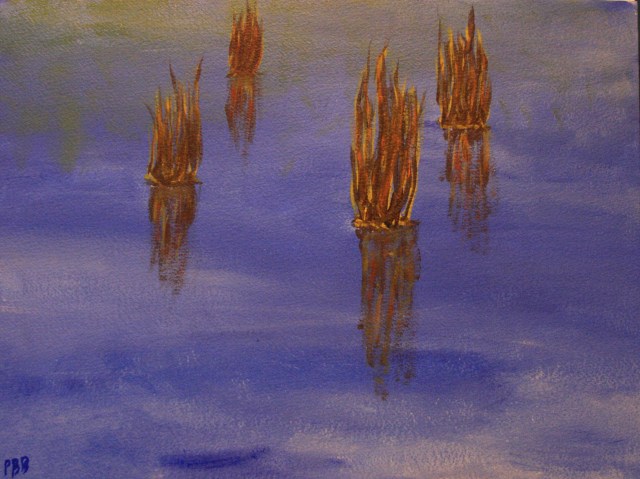
Here is the painting I spoke about yesterday. It is my first painting completed since returning from Europe. This pond is in the Tuileries Garden near The Louvre. The clumps of grasses grow in the pond and create beautiful reflections. More paintings to come…

Tuileries Pond

Posted in Art, Travel | 2 Comments